[Audio Intro: Soft, atmospheric electronic music fades in, mimicking the hum of a spaceship’s life support, then ducks under the voices.]
Alex: Hey everyone, welcome back to the show. Today, we are diving deep into a really fascinating chapter from John Oakley McElhenney’s hyperfiction novel, Untethering. The chapter is titled “Wild Hair Inside the Fallen Craft,” and honestly, it is such a mood.
Sam: Oh, absolutely. If you’ve ever felt completely burnt out, like your literal “shields are collapsing” from existential exhaustion, this text is going to speak to you. It uses this incredible sci-fi backdrop—a downed rocket ship —as a massive allegory for modern psychological burnout.
Alex: Right, because on the surface, you have this narrator stuck in a grounded spaceship with cats running around checking the space suits and kibble in the storage bay[cite: 5, 6]. But very quickly, you realize the real journey isn’t across the galaxy. It’s entirely internal.
Sam: Exactly. Let’s look at how McElhenney blurs the lines between sci-fi and reality. The narrator is dealing with a cracked ship hull and sodium lights outside, but they are also stressing about everyday human stuff. Like, they literally say, “I did not get the cybersecurity work done. I had promised my employer”.
Alex: I love that juxtaposition. You’re in a sci-fi crater, but you still have a boss who is going to be frustrated with you in the morning! It anchors this cosmic setting into the quiet, localized anxiety of a standard work week. The narrator just doesn’t have the energy for an “analytical puzzle” right then. They need to turn down the temperature in the sleep quarters and just power down.
Sam: And that brings us to the structure itself. Because this is hyperfiction, the text is broken into these short, numbered fragments. It almost reads like data bytes or lines of code, which fits the tech theme. But from a literary perspective, those brief, declarative sentences—like “Pause. Ponder. Rest.” —perfectly mimic the cadence of someone who is utterly depleted. They don’t have the cognitive energy for long, flowing paragraphs.
Alex: Totally. Now, one of the most powerful themes here is this transition from wanting connection to accepting absolute self-reliance. There’s a line where the narrator realizes, “We have to light our own pilot lights. We can fly and navigate alone”.
Sam: Yes! And they even say of a distant woman, “There’s a light. She is not it. I am it”. It’s a pretty bold thesis for the novel: true peace can’t be outsourced to someone else. You have to find that internal compass—or what the narrator calls their own “consultation with god.”
Alex: But it’s not a bitter isolation either. It’s protective. There’s this really weird but fascinating mid-chapter digression about Eastern medicine and fascia—the “3rd fluid system” of the body. The narrator talks about physical massage releasing debris into the bloodstream as part of a hyper-repair process.
Sam: Right, they mention how American science is just discovering it through a tattoo removal process revealing the ink traveling through this third circulatory system\. But metaphorically, that’s exactly what the narrator is doing by “untethering.” They are letting the emotional debris flush out of their system. Being grounded isn’t a failure here; it’s a mandatory pit stop for healing.
Alex: And despite the heavy themes of exhaustion and isolation, there is a wry, existential humor to it all. I mean, the narrator is pondering the universe, and then says, “If god is at the helm, who am I to second-guess an actress in a local production on a Saturday night in May?”
Sam: Right? It completely brings it back to the absurd, beautiful randomness of everyday life. Even when the AI companions—ironically named Dick and Jane —start running out of tokens and repeating clichés [cite: 23], the narrator finds a way to be happy alone with their cats. They end the day giving that performance “proverbial roses” in their mind and just letting go.
Alex: It’s a beautiful vignette about turning inward when the outer world gets to be too much. If you want to check out more of the framing or the rest of the script, definitely hit up McElhenney’s website.
Sam: Absolutely. Until next time, remember to light your own pilot lights. Sleep well, crew.
[Audio Outro: The atmospheric music swells slightly, then fades out completely.]
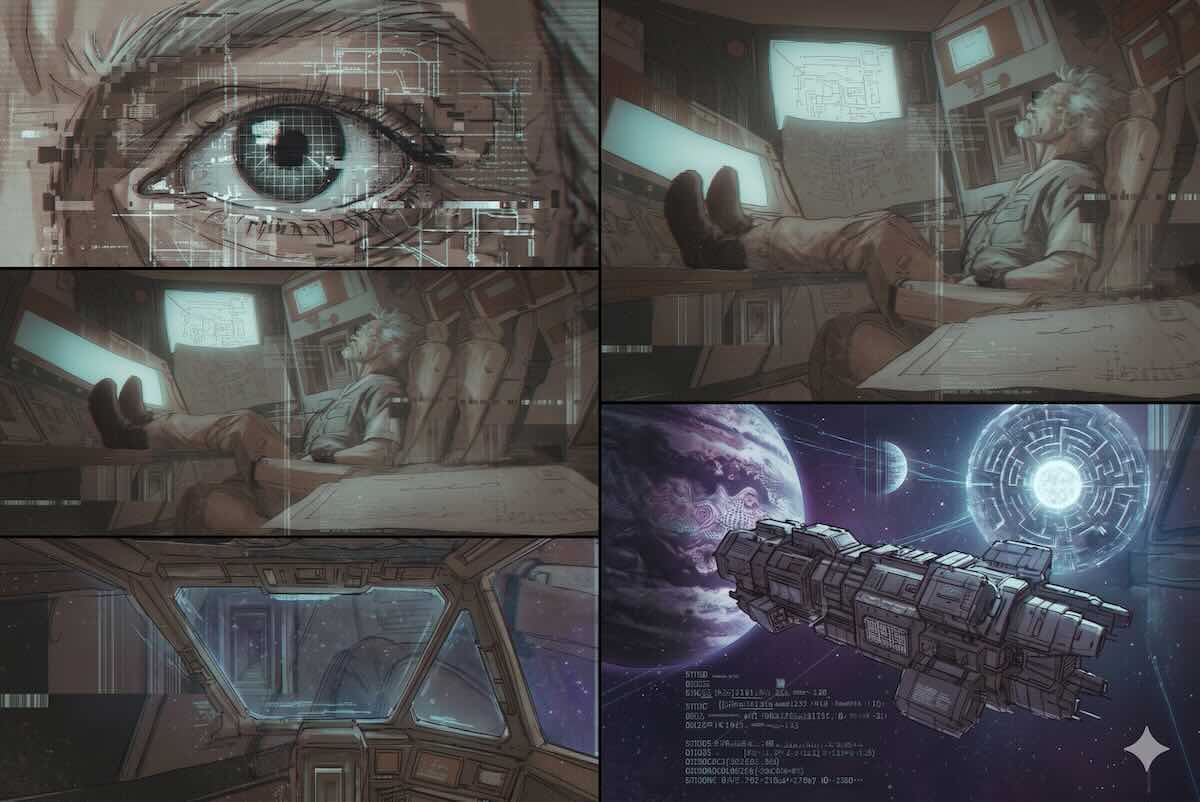
Storyboard/moodboard of the screenplay now in development for “untethering”
Primary Source: John Oakley McElhenney – Untethering Script
< back to the Untethering index