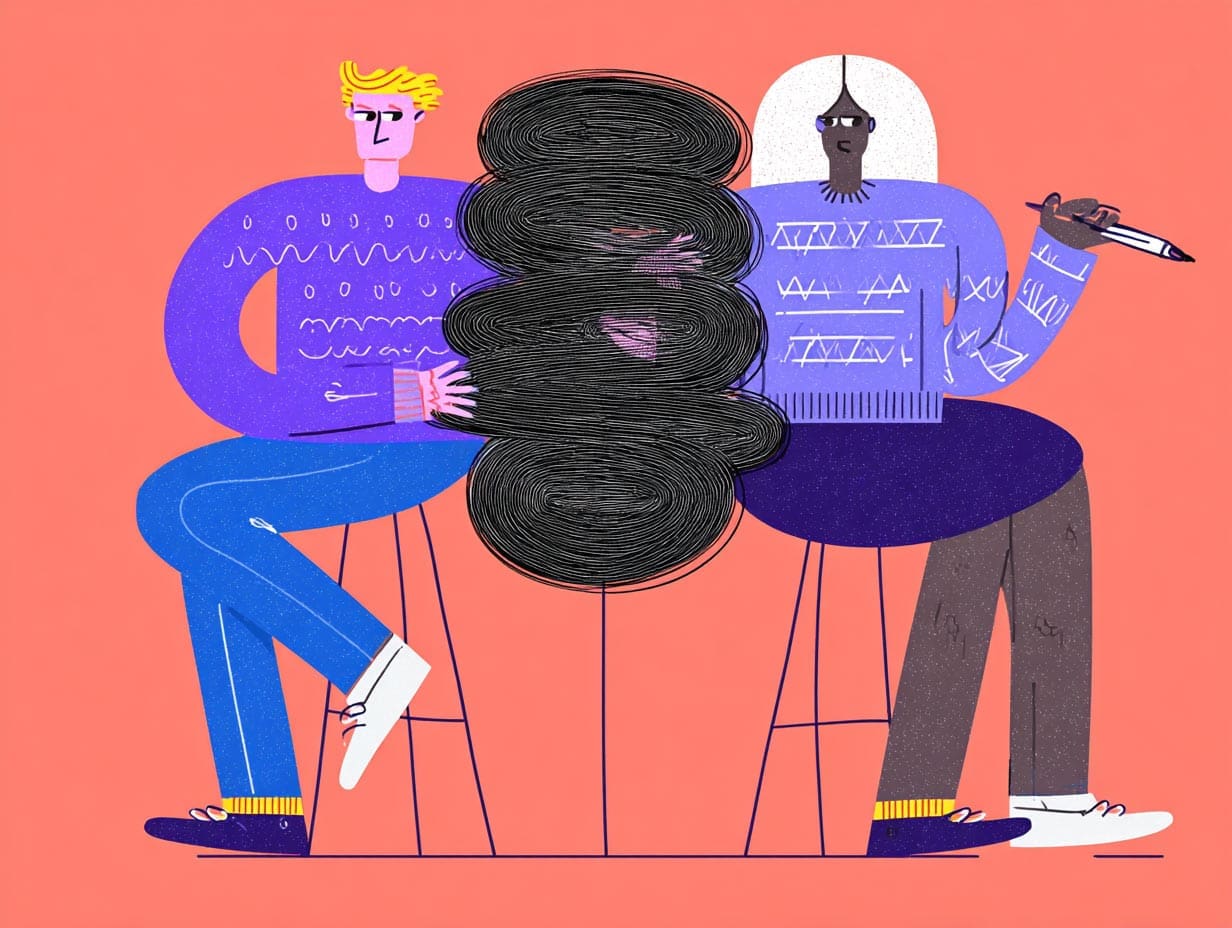
I knew what I was stepping into. The red flag was burning before me. I glitched.
I have glitched before. I will glitch again. My goal, however is to reduce my own glitching, notice when others around me are glitching. When appropriate, making my exit as painlessly as possible. Glitching usually causes high drama. If I do not respond to the glitch, but merely ask for a boundary and move on when that request is violated repeatedly.
I cannot fix anyone else.
I am working on my own glitching. I made a big mistake. I won’t say now that I regret it, probably some major life lesson to learn, but I will do it differently at the next opportunity. I can reduce the glitching in my life. I cannot be responsible for another person’s issues.
All relationships are a form of feedback loop.
When the loop is healthy, the conversation, the issues, the resolution of the issues, and the repair after a fracture become a habit. A healthy habit.
Let’s not damage each other with our glitching. Let’s not get our glitch others. Own the glitch. Own our own pain, suffering, regrets, and anxiety. Then reopen when possible.
A feedback loop with one damaged receiver does not work.
A glitch happens, a partner asks for a moment. Both partners take a moment to restore their own equilibrium. When the time is available and the willingness is there, two people can easily move through triggers, upsets, and snares. The pause. Ponder. Apologise. And rejoin is all part of a process most articulately expressed by Brené Brown.
Not the Instagram Brené Brown. The researcher, the scientist, the author.
She has provided a powerful framework to help feedback loops regain their balance and shape of safety, softness, and kindness.
Both partners must be willing to drop their blame and fight mode. Both partners have to relax alone and release the OLD tension that perhaps is affecting the current disconnect. That old stuff, that’s more of the issue in most adult relationships.
Most of us get stuck in our family or origin dynamics. I was the hero child, the mascot, the magician. I learned to morph myself into a performer, athlete, singer, student. I believed that my performances, my prayers to Jesus Christ, my goodwill were enough.
We are alone with our issues.
In a fractured relationship, one or both partners has lost the ability to be sensitive to the feedback loop. It’s as if the antennae are damaged from previous experiences, previous traumas, perhaps even real-time issues that are not about the present relationship, or even the present moment.
If someone cannot return from their fog to the present moment, look you in the eyes and apologize, they are not ready to re-establish the feedback loop. That’s okay. But the offended and shut-down party has to take responsibility for their own pain and suffering. Rather than bleeding all over the people around them, they need to find a peace within themselves. First, inner peace. Second, peace with an intimate partner.
As relationships wobble out of bounds into something resembling a bad marriage, it can be hard to rebalance, re-trust, and reconnect. Our tendency, as hurt people, is to run away or fight.
The loop requires that those two options are NOT on the table.
Here’s the trick that BB taught us all with her two world-famous TED Talks and all of her work since then.
Braving.
I won’t go into the specifics of the process, but go seek her work. It’s seminal to our ability to love and weather damaged feedback loops.
The main part I want to illuminate is this:
I may cause my partner to feel triggered. What happens next is up to both people, the triggered and the “wtf did I do” partner.
The triggered partner is responsible for bounding in their own racing mind, raging thoughts, and damaged thinking. “I need to take a break.”
The non-triggered, but now slightly alarmed partner, remains as neutral as possible. “I will hold your hand while you go through this, if you want me to be close. I will give you some space and time if you need to be alone to process what you’re feeling.”
Full-stop.
The triggered person must take ownership of their disconnect. The process asks them to ask for a break. Set an expectation of how long they need. And make arrangements for the repair process.
If the non-triggered person keeps setting their partner on fire, it’s time to do some deep dives into the dynamics of the partnership. A relationship with a damaged feedback loop has the potential for grave injury and insult.
“You’re just here for the sex,” might be a phrase launched at a partner to get a reaction. The triggered person, in fight, flight, freeze, or fawn, will take evasive action to assign the blame, and never apologize or repair for their own triggered issues.
As this process happens repeatedly, it’s important to step back and learn the lesson: a damaged feedback loop must be repaired before progress is made.
A triggered person needs to own their process, their work, and then do the steps necessary to accomplish safety with their partner, now hyper-aware of setting off any conflict at all. A complaint can become a fight.
In a night of loving conversation and joining, a single interruption in the morning can set off a cascade of unresolved anger or anxiety. There may have been 20 interruptions in the course of a morning together. When one “triggers” a partner, both can try to examine what happened.
Only one of the partners can manage and gain insight and control over their unresolved issues. That’s usually what emerges in a triggered moment.
A past hurt. A current hurt that is unrelated to your partner. A pattern of behaviors that feels unsafe. The overall trust and respect of the relationship if fractured when a triggered party blows up the moment, causes upset on both sides, and cannot own that the ISSUE may not be about the partner. Most of the time, the upset is old stuff.
When the non-triggered partner tries to fix or repair prematurely, it does not work. “I’m sorry,” too soon, is rejected energetically, and may actually increase the discomfort in the triggered partner.
Those are the dynamics.
In our lives we hope to get better at living without being triggered or triggering someone we care about. When the process breaks down, it looks like a breakup every single time there’s an issue. A frustration can become an angry statement. A weapon of cunning and sharpness.
“You’re just here for the sex. You probably don’t even like me.”
As the receiver of such a message, there are only a few things you can do. What you cannot do, or what is not recommended, ever, is to try to soothe or fix the pain of the person who’s blinded by their own trigger.
You have to give it time. Let them settle themselves down without any further possibility of triggering. Let them go talk to someone else. A triggered partner that returns after 30 minutes and immediately starts fighting again… You can see how that’s not going to be helpful.
I have to unpack my own beautiful woman as savior and healer. I will not heal WITH another person. I must heal myself. Alone. At some point, I may be ready to try alignments with another partner.
I made the mistake. I learned the lesson. I’m not unhappy that I broke my own rules. The experience was breathtaking for two weeks, then the cascade of triggers pulled us down and down and down. Into a place where the feedback loop no longer functioned.
Then it’s time to go.
I asked for the weekend to collect my own thoughts. She said she was done, and would I pay her the $40 for the tickets to the show we attended two weeks ago.
It is good to ask for time alone. If that’s a threat, perhaps the issue is different than either of you thinks it might be.
Time to pull back and learn the lesson.
A beautiful woman has issues, too. An archetypal connection may cause reality distortion. Sex may become the bridge.
Sex is not a good bridge. Make-up sex can be a repeating pattern. One that masks the issues, avoids the repair and rebooting, and sidesteps the boundaries and trust of a healthy relationship.

back to the glitching index