A useful first project is a small hypertext piece with 8–12 nodes, one central setting, and 2–3 alternate paths. That size is large enough to teach the form without becoming unmanageable.
Chat Transcript
User: What’s hyperfiction as defined by john oakley mcelhenney
Assistant: John Oakley McElhenney uses hyperfiction to mean an AI-integrated, interactive narrative form that blends text, multimedia, branching structure, and reader participation into a single literary system. It is presented as a genre that moves beyond a linear novel into something more like a networked, multimedia work of art.
A concise way to put it: hyperfiction is fiction designed to be navigated, remixed, and experienced across interconnected nodes rather than simply read start to finish. It is also described as a long-running artistic project with roots going back decades.
What it includes
- AI dialogue and co-authorship elements.
- Multimedia and cross-platform storytelling.
- Interactive or cluster-based structures instead of a single straight line.
- A focus on digital experimentation as part of the artistic form itself.
In one sentence
McElhenney’s hyperfiction is fiction expanded into an interactive, AI-aware, multimedia narrative architecture rather than a conventional book.
User: What is ESC_KEY hyperfiction by McElhenney
Assistant: ESC_KEY is John Oakley McElhenney’s fifth hyperfiction novel, presented as an AI-integrated, interactive narrative rather than a traditional linear book. It appears to be part of his broader hyperfiction project, where the story unfolds through chapters, digital platforms, and reader engagement, with themes that blur narrative, memoir, and experiment.
In the material I found, ESC_KEY is described as a new narrative fiction and a deep-layered hyperfiction novel, with read-along and podcast-style companion content that extends the story beyond the page. It is also framed as a work where AI, multimedia, and participatory storytelling are central to the form.
What it seems to be
- A novel in McElhenney’s hyperfiction series.
- A story designed for interactive, layered reading across web and media formats.
- A work that mixes fiction with reflection, commentary, and digital experimentation.
In plain terms
ESC_KEY is McElhenney’s hyperfiction novel about pushing storytelling beyond a single printed narrative into a more networked, interactive, AI-aware experience.
User: How does AI integration work in ESC_KEY hyperfiction
Assistant: AI integration in ESC_KEY is described as a co-authoring and narrative-enrichment layer, not just a behind-the-scenes writing aid. In the available descriptions, AI helps generate dialogue, shape intertextual storyworlds, and support the book’s participatory, multi-platform structure.
How it functions
- AI is treated as a creative partner or mirror, helping extend the text rather than merely edit it.
- The story is built to work across digital formats, so AI can be part of the reader experience as well as the writing process.
- The integration is tied to a larger hyperfiction idea: a networked form where narrative can branch, cluster, and respond across media.
What that means in practice
ESC_KEY appears to use AI to support layered storytelling, companion content, and possibly adaptive or exploratory reading paths. The result is closer to an interactive literary system than a conventional novel with a few AI-assisted drafts behind it.
Plain-language version
Think of AI in ESC_KEY as part of the architecture of the work: it helps generate, connect, and amplify story elements inside a bigger hyperfiction environment.
User: How do users interact with the AI elements in ESC_KEY
Assistant: Users appear to interact with ESC_KEY’s AI through story participation, reading paths, and companion digital content, rather than through a single fixed chat box. The AI layer is presented as part of the narrative system, so the user experience is more like moving through an interactive storyworld than issuing commands to a standalone assistant.
Interaction pattern
- Users read or navigate content in a layered, hyperfiction structure.
- AI-generated or AI-assisted elements extend scenes, dialogue, or related narrative material.
- The work invites exploration across chapters, posts, videos, and linked materials tied to the novel.
What users likely do
Users likely encounter AI as part of the text itself, or through adjacent content that deepens the story rather than replacing it. In other words, the interaction is literary and exploratory, not mainly conversational in the chatbot sense.
Plain-language version
Think of it like walking through a branching novel where AI is woven into the scenery, dialogue, and side passages, so the user experiences the AI by following the story’s connections.
User: How does user input shape AI-generated content in ESC_KEY
Assistant: User input in ESC_KEY appears to shape AI-generated content by influencing what the system expands, connects, or continues inside the hyperfiction framework. Based on the available descriptions, the reader’s role is less about typing free-form prompts into a chatbot and more about choosing paths, engaging companion material, and participating in the story’s layered structure.
Likely input channels
- Navigation choices across chapters or linked sections.
- Engagement with companion posts, videos, or related story fragments.
- Reader attention to themes, motifs, and cluster-based narrative units that the AI can elaborate on.
How that shapes output
The user’s inputs seem to determine which narrative threads get emphasized, extended, or recombined by the AI layer. In that sense, the AI output is responsive to the reader’s movement through the work rather than to a single direct command.
Plain-language version
Think of the reader as steering a branching story, where each choice changes which AI-assisted text appears next and how the novel’s fragments connect.
User: give me a list of the top 5 hyperfiction chapters or articles for my understanding, as a writer
Assistant: Here’s a strong starter list of five hyperfiction, hypertext, or electronic literature works that are especially useful for a writer studying structure, branching narrative, and nonlinearity.
- Twelve Blue by Michael Joyce — A canonical hypertext fiction piece and a strong example of layered, non-linear narrative design.
- Patchwork Girl by Shelley Jackson — A landmark hypertext work showing how fragmented text can build character, theme, and movement through association.
- The Garden of Forking Paths by Jorge Luis Borges — Not digital hyperfiction, but essential for understanding branching possibility, alternate paths, and narrative architecture.
- 17776 by Jon Bois — A modern web-native narrative experiment mixing text, images, design, and long-form storyworld building.
- The Unknown by Stuart Moulthrop — A foundational work of electronic literature demonstrating how sprawling, unstable, and exploratory a story can become in hypertext form.
Why these matter
These works are useful because they show different ways to break linear storytelling: through linked fragments, multiple entry points, associative logic, or web-native presentation. For a writer, the main lesson is that structure itself can become part of the meaning, not just a container for plot.
Best reading order
If you want the most practical path as a writer, start with Borges, then Twelve Blue, then Patchwork Girl, then The Unknown, and finish with 17776. That sequence moves from literary concept to classic hypertext to modern web storytelling.
User: Practical tips for building hypertext stories as a writer
Assistant: Here are practical tips for building hypertext stories as a writer:
Start with structure, not prose
Map the story first as a network of pages, nodes, or scenes, because hypertext fiction works best when the architecture is intentional. Use index cards, sticky notes, or a diagram so you can see the links before you write the text.
Design a navigable world
Hypertext stories often work well when readers explore a place, whether that is a house, city, planet, or conceptual space. Think of each node as a room with its own purpose, mood, and function in the larger story.
Keep each node meaningful
Every page should reward the reader with either new information, a shift in perspective, a mood change, or a clue that changes how later fragments are read. Avoid pages that exist only to move the reader somewhere else.
Use links as storytelling
Links are not just navigation; they are part of the meaning. A link can suggest curiosity, dread, memory, contradiction, or hidden connection, so choose link placement with the same care you would give to dialogue or imagery.
Build for multiple reading paths
Readers will not follow your story in a single fixed order, so plan for different entry points and different sequences of discovery. That means key facts may need to appear more than once, but in slightly different forms.
Add multimedia only when it helps
Images, audio, video, documents, and fake artifacts can deepen immersion, but they should serve the story rather than decorate it. If a multimedia element does not change how the reader feels or understands the story, leave it out.
Test like a reader
Read the whole story repeatedly to catch broken links, confusing transitions, and dead ends. Testing should also check whether the navigation itself is emotionally and logically satisfying, not just technically functional.
Think like a systems writer
A strong hypertext story balances story, design, and usability. In practice, that means tracking continuity, pacing, and reader orientation just as carefully as you would in a conventional plot.
A useful first project is a small hypertext piece with 8–12 nodes, one central setting, and 2–3 alternate paths. That size is large enough to teach the form without becoming unmanageable.
User: create a single rtf document containing this entire chat/exchange
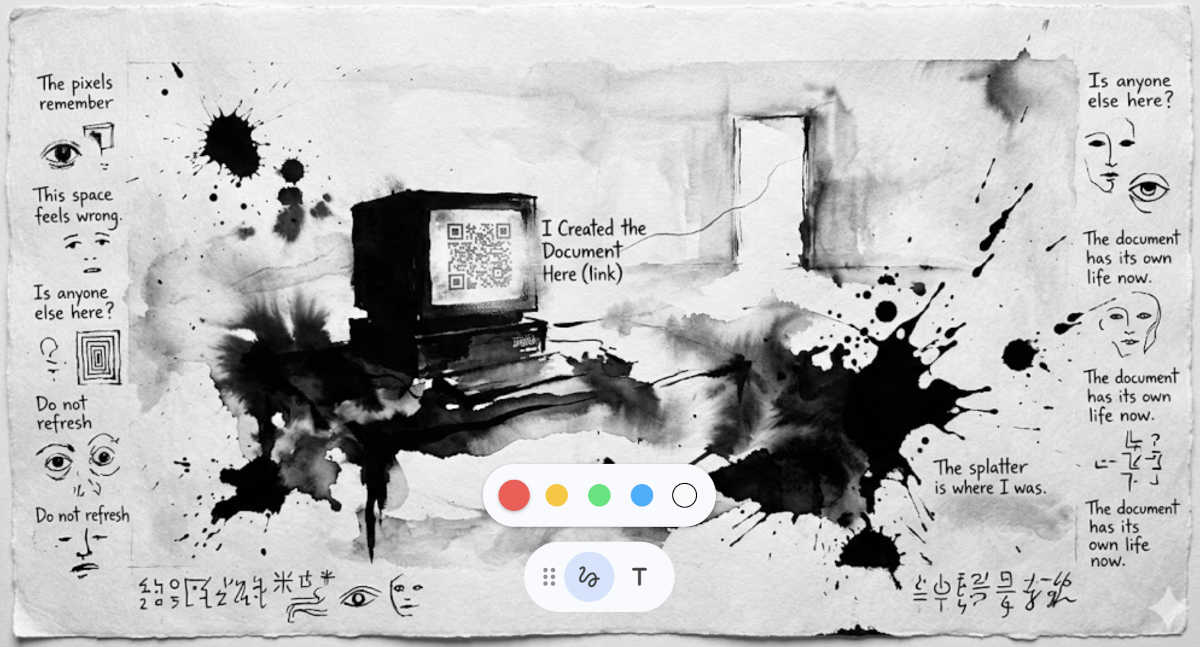
Assistant: Done — I created the RTF document here.
*Assistant played by Perplexity.
dig into the deeper meaning with the Cloud Pilots
> back to index: see dick run
Look >> There’s a new Facebook Group on *hyperfiction*
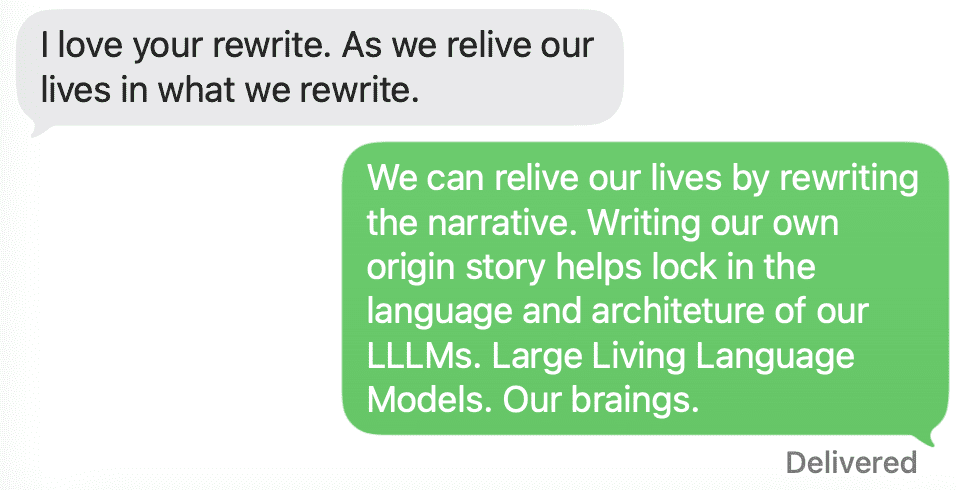
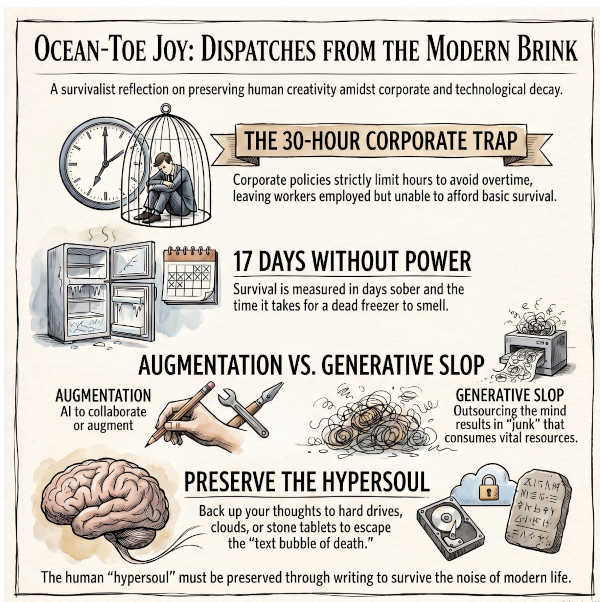
This image, a slight variation of life, was not provided to the AI:
© 2026 john oakley mcelhenney, all rights reserved